



Patient Resources
Review information, resources and connections to help you get the most out of your care.
Hematology is Central to the Identity of Incyte
We are a leader in the discovery and development of therapies for patients with myeloproliferative neoplasms (MPNs) and graft-versus-host disease (GVHD).
Building on this legacy of innovation, we’re advancing mutation-specific targeted therapies across the full MPN spectrum and investigating innovative approaches to treating bleeding disorders, including von Willebrand disease (VWD).
Research and Development Highlights
INCA033989 (mutCALR)
Mutations that occur in the majority of patients living with MPNs, like calreticulin (mutCALR), which is the second most common oncogenic driver of MPNs, are a focus of our pipeline. Incyte is at the forefront of developing novel therapies for patients with mutCALR-driven essential thrombocythemia (ET) or myelofibrosis (MF) that target only malignant cells and spare normal cells, including INCA033989, a potential first-in-class, mutCALR-targeted monoclonal antibody.
Latarcibart (formerly VGA039) (monoclonal antibody targeting Protein S)
Protein S plays an important role in regulating blood clot formation and maintaining hemostasis. Incyte is advancing latarcibart (formerly VGA039), a novel, investigational monoclonal antibody that targets Protein S, with dual actions promoting platelet attachment and enhancing fibrin deposition to restore hemostasis. Latarcibart has the potential to be a universal hemostatic therapy that can treat numerous bleeding disorders, starting with von Willebrand disease (VWD) - the most common inherited bleeding disorder.






Hematology Focus Areas
MPNs
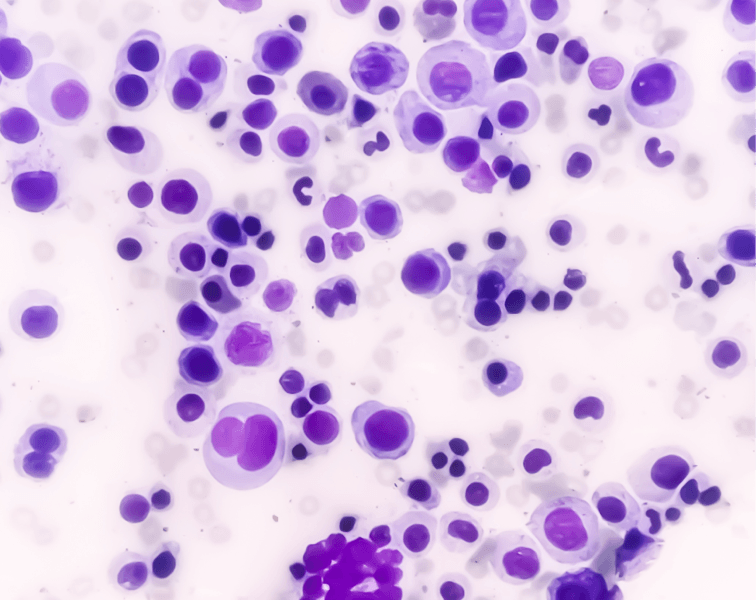
MPNs are a closely related group of blood cancers in which the bone marrow functions abnormally. The bone marrow is where the body’s blood cells are made. MPNs are progressive blood cancers that can strike anyone at any age, but they are more common in older adults. There may be as many as 200,000 people in the U.S. living with the most prevalent MPNs: myelofibrosis, polycythemia vera and essential thrombocythemia.1
Von Willebrand disease (VWD)
VWD is the most common inherited bleeding disorder in which the blood does not clot properly, caused by low or defective von Willebrand factor. VWD patients may experience excessive bleeding with varying severity and frequency, negatively impacting their daily lives. Current therapies for VWD prophylaxis include factor replacement therapies requiring multiple intravenous infusions every week. Approximately 135,000 people in the U.S. have been diagnosed with VWD.2 As a result of low awareness, increased time to diagnosis, and a lack of treatment innovation, many people with VWD remain undiagnosed or not properly treated.3,4


GVHD
GVHD is a serious condition that can occur after an allogeneic stem cell transplant (the transfer of stem cells from a donor) in which the donated cells initiate an immune response and attack the transplant recipient's organs. It is a leading cause of significant morbidity and mortality after an allogeneic stem cell transplant and is estimated to develop in approximately 42% of transplant recipients, affecting approximately 17,000 patients in the U.S.5 Of patients who develop chronic GVHD, nearly 50% require at least three lines of treatment, emphasizing the need for additional effective treatment options.6
Lymphomas
Diffuse large B‑cell lymphoma (DLBCL) is the most common type of non-Hodgkin lymphoma (NHL) in adults worldwide, representing 40% of all cases.7 It is characterized as an aggressive, fast-growing type of lymphoma that can emerge in lymph nodes or extranodal sites such as the gastrointestinal tract, skin and brain.8 Each year, approximately 24,000 people in the U.S. and up to 36,000 people in Europe are diagnosed with DLBCL.9,10 With about 40% of these patients not responding to initial therapy or relapsing thereafter, there is a high medical need for new, effective therapies.11,12
Follicular lymphoma (FL) is the second most common type of NHL and represents up to 30% of NHL cases.13 While considered an indolent, slow-growing disease with prolonged survival, FL is challenging to treat due to its tendency for frequent relapse, need for multiple lines of therapy and potential transformation into large B-cell lymphoma.13,14